A handbag is seen as an outline but experienced as a volume. Width, height and depth tell only part of the story: a narrow opening may limit access to a broad interior, while a tapered body may hold less than its maximum measurements suggest. Start by comparing the footprint, mouth and internal divisions rather than judging usefulness from the front view alone.
Category names are flexible. One maker’s shoulder bag may be described elsewhere as a hobo or a small tote. A top-handle design can also include a crossbody strap. Treat the terms as descriptions of shape and carrying arrangement, not standardized specifications. The best comparison uses the same practical questions for every object.
Totes and open volumes
A tote generally combines a broad opening with two handles and a relatively uncomplicated body. The apparent simplicity can conceal important differences. A reinforced base supports contents differently from an unstructured one. Long handles may fit over a coat, but their attachment points and spacing influence how the bag hangs when loaded.
Check whether the closure actually secures the main compartment. A central tab may hold the sides together without enclosing the corners. An internal pouch can organize small objects but does not necessarily protect everything in the bag from weather or access. Consider the environment in which you will use it rather than assuming an open tote is either universally convenient or inherently impractical.
Large volume also encourages overfilling. The weight of the empty bag, plus your normal contents, matters more than capacity alone. A wide strap may distribute pressure differently from a narrow rolled handle, but comfort depends on body position and the load. If trying a bag in person is possible, use a realistic, permitted load instead of judging an empty sample.
Structured bags and top handles
Structured top-handle designs emphasize a defined outline. That clarity may come from panel geometry, reinforcement or both. A firm bag can protect the arrangement of its contents and keep a deliberate silhouette, but it may be less accommodating when carrying irregular objects. Look at how much of the nominal interior remains usable around gussets, closures and internal partitions.
Handle clearance is easy to overlook. A short handle may be intended for the hand rather than the forearm, especially over a sleeve. A detachable shoulder strap changes the carrying option without necessarily changing how the body rests against the wearer. Check the attachment location: the angle of the bag can shift once suspended from a longer strap.
Delvaux and Valextra are useful reference houses for studying defined forms and restrained closure placement. Hermès provides another context for examining the relationship between handles, flaps and straps. None of these references makes a silhouette exclusive to one maker. Use them to sharpen a visual vocabulary, not to identify an unlabelled object conclusively.
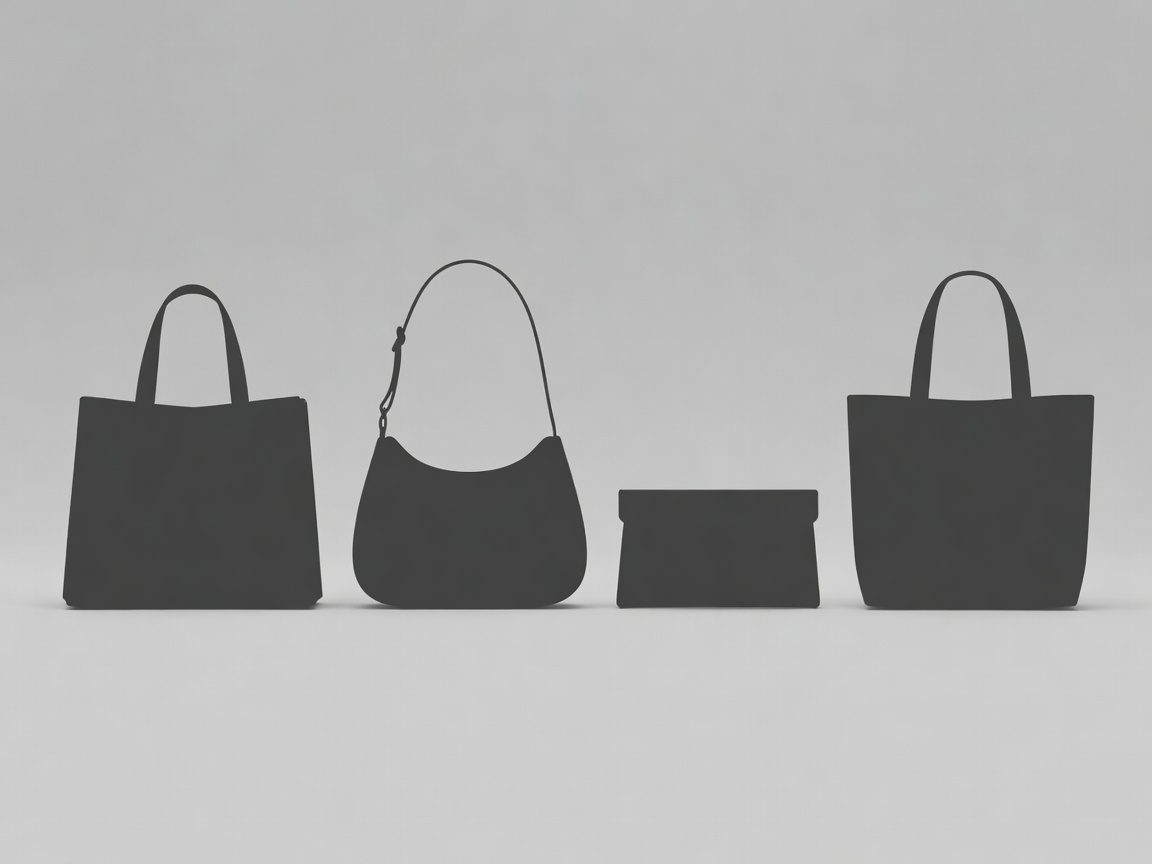
Shoulder, crossbody and curved forms
Shoulder and crossbody describe carrying positions rather than a single body shape. Strap drop and strap length are related but not identical measurements; confirm how the maker measures them. An adjustable strap still has a finite range. Its shortest setting may not work for shoulder carry, and its longest may not position the bag as expected over heavier clothing.
A curved or crescent body can sit close to the torso, while a rigid rectangular bag may project outward. Neither behavior is automatically better. Consider whether the zipper is accessible while worn, whether the strap twists, and whether the body catches against a coat. Chain sections add another variable: their feel, movement and interaction with fabrics differ from a plain leather or textile strap.
Chanel’s chain-related vocabulary and Fendi’s compact shoulder-bag references offer useful contexts for this comparison. Loewe’s experiments with volume remind us that geometry can change access as much as appearance. Observe the mechanism directly rather than assuming that an unusual shape sacrifices function or that a familiar rectangle guarantees it.
Clutches, buckets and smaller formats
A clutch usually emphasizes hand carry and limited contents. Test the actual opening against a phone or case rather than relying on the outer width. Internal hardware can reduce space, and an evening object may be designed for very different contents from an everyday bag. If a wrist strap is supplied, confirm its intended use rather than treating every decorative loop as load-bearing.
A bucket form typically offers depth and a gathered or partially closed top. That depth can be useful for bulky items but make small objects difficult to retrieve. A drawstring may alter the usable opening and the way the rim wears. A soft pouch raises similar questions about organization and support. Shape selection is ultimately a negotiation between access, carrying comfort and the way you prefer to arrange belongings.
| Form | Useful characteristic | Check in practice |
|---|---|---|
| Tote | Broad access | Closure coverage and loaded weight |
| Top handle | Defined carry position | Handle clearance and gusset space |
| Crossbody | Hands-free arrangement | Strap range and resting angle |
| Bucket | Deep central volume | Retrieval and drawstring behavior |
| Clutch | Compact hand carry | Opening width and essential contents |
A useful final exercise is to write three non-negotiable requirements before looking at house names. They might concern a secure opening, a particular item fitting inside, or comfortable carry over a coat. Keep those requirements separate from aesthetic preferences. The result is not a universal “best bag,” but a clearer account of why a particular design fits your life.
Reference starting points
Use current measurements and carrying descriptions from Delvaux, Valextra, Hermès, Chanel, Fendi and Loewe. Model specifications can change; record the version you examined.