A handbag’s exterior is the most visible part of a layered object. Behind it may be a backing textile, an adhesive layer, stiffening components and a lining. Handles can contain reinforcement that differs from the body. Before judging a bag from a photograph or a touch, establish which part of the assembly you are describing and which details remain unknown.
Useful material research begins with the maker’s description for the exact model and version. A familiar model name can be offered in leather, textile or mixed constructions. Descriptions may also change between seasons. Save the relevant wording with your notes, but do not stretch a brief product label into a claim about every production stage.
Read leather beyond the grain
Leather appearance depends on the hide, preparation, tanning and finish. Smooth, grained and embossed describe surface characteristics rather than a complete quality hierarchy. A visible grain may be natural, enhanced or embossed. A heavily finished surface can offer a different balance of appearance and maintenance from a lightly finished one; neither should be declared universally superior.
“Full-grain” and “top-grain” are useful terms when accurately supplied, but photographs rarely establish them reliably. Likewise, softness does not by itself identify an animal species or indicate greater durability. Thickness, structure and finish all contribute to how a panel bends. A bag that stands upright may owe much of that behavior to reinforcement rather than unusually firm leather.
House-specific leather names should be treated as particular product terminology. Do not assume that a name used by Hermès has a direct equivalent at another maker. Prada’s Saffiano references, for example, invite attention to a characteristic crosshatched appearance, but the complete material specification must still come from the particular product description. A pattern is not a laboratory test.
What you see and touchSubstrate
The underlying materialAssembly
How layers work together
Canvas, nylon and mixed materials
Coated canvas is not simply another name for leather. It combines a textile base with a surface coating, while handles, piping and trim may use different materials. Louis Vuitton’s coated-canvas offerings are a familiar reference point, but care decisions should follow the precise model and component. A product suitable for a leather handle may be unsuitable for the coated body.
Nylon offers another set of possibilities: lightness, flexible shaping and a relationship to functional clothing. Prada provides a well-known fashion context, though fiber identification alone does not settle abrasion resistance, water performance or long-term condition. Weave, finish, backing, seams and previous use all matter. “Water-resistant” should never silently become “waterproof” in your notes.
Textile linings deserve their own inspection. Check for loose joins, staining and wear around pockets. A lining that feels thin may have been chosen to reduce weight; a leather lining adds another material to maintain. Look at the whole design rather than treating a single lining category as an automatic mark of superiority.
Edges, seams and stress points
Construction is easiest to understand where materials meet. An edge may be folded, bound, left exposed or finished with an applied coating. These are different solutions to different design problems. Edge paint can wear at flexing points, while folded edges can show abrasion or bulk. The appropriate question is how well the treatment suits the location and intended use.
Study handle roots, strap anchors, corners and the ends of zippers. These areas experience repeated force. Even stitching and aligned seams can be useful observations, but they do not reveal stitch type throughout the object or the quality of hidden reinforcement. Hand stitching, machine stitching, hand assembly and hand finishing are separate descriptions, not interchangeable prestige terms.
In a woven surface associated with Bottega Veneta’s design language, examine how strips meet edges and openings. In a sculptural form associated with Loewe’s vocabulary, examine how panels resolve at folds. These questions reveal design choices without claiming to reverse-engineer a named product from a single image. Avoid destructive tests, scratching or pulling at seams.
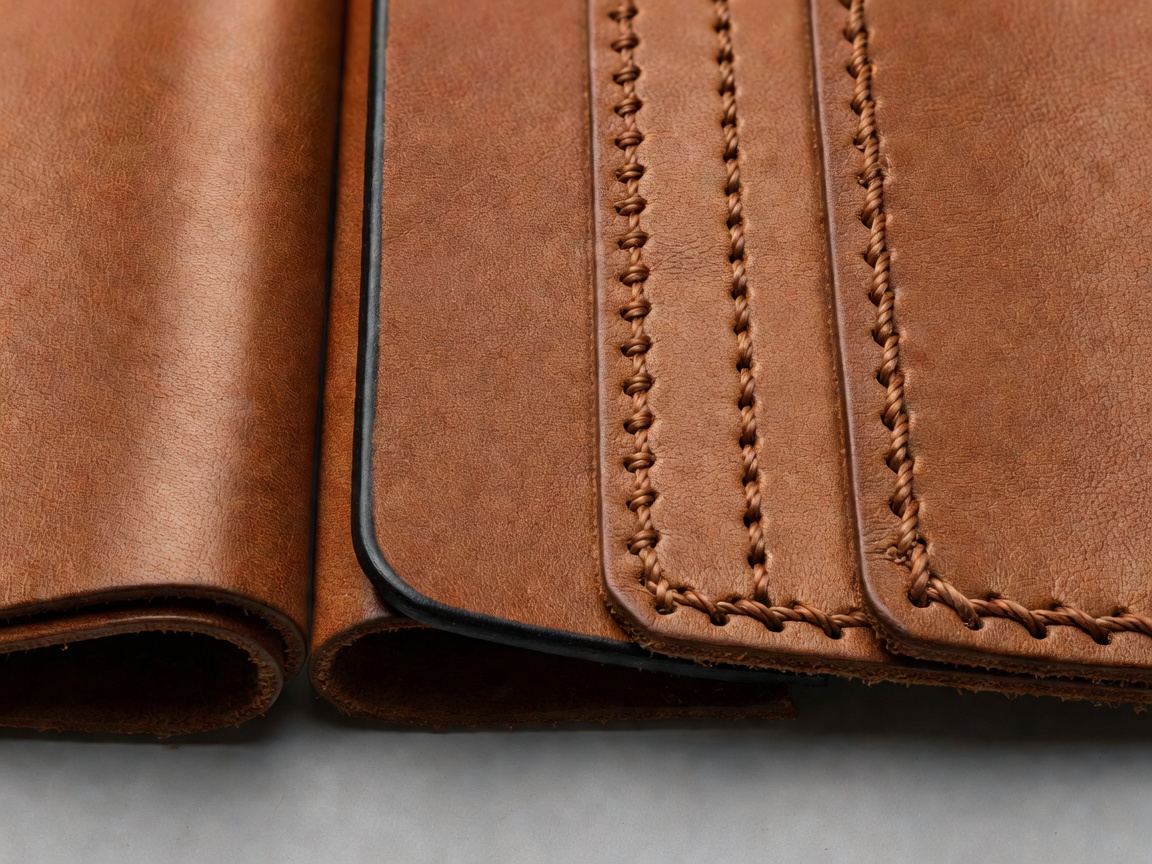
An inspection vocabulary
Write notes that another reader could verify: “surface coating cracked at the fold,” “lining loose beside the pocket,” or “handle edge worn on the underside.” Avoid vague conclusions such as “bad leather” when the evidence may concern a finish or a repair. Where a stain, tackiness or odor is present, record it without diagnosing the cause from appearance alone.
The same restraint applies to sustainability. A natural fiber, recycled content claim or long house history does not establish the overall impact of a particular bag. Look for specific scope, percentages where provided, traceable information and repair options. If the maker supplies no detail, mark the question as unresolved instead of filling the gap with a favorable assumption.
What can a photograph tell me?
It can show visible form, grain pattern, seams and wear under particular lighting. It cannot reliably establish fiber composition, hidden reinforcement, odor or the full condition of a flexible coating.
Why is a generic “leather cleaner” not enough?
Finish compatibility matters. Suede, patent surfaces, lightly finished leather and pigmented leather can respond differently. Seek instructions for the actual material before treatment.
What should I ask the seller or maker?
Ask for the exact exterior and lining materials, known repairs, coating condition, care instructions and available repair service. Keep their answers with your model record.
Reference starting points
Compare exact product descriptions on Prada, Hermès, Louis Vuitton, Bottega Veneta and Loewe. For historical material descriptions, consult individual records in V&A Collections. These sources serve different purposes and should not be treated as independent performance tests.